
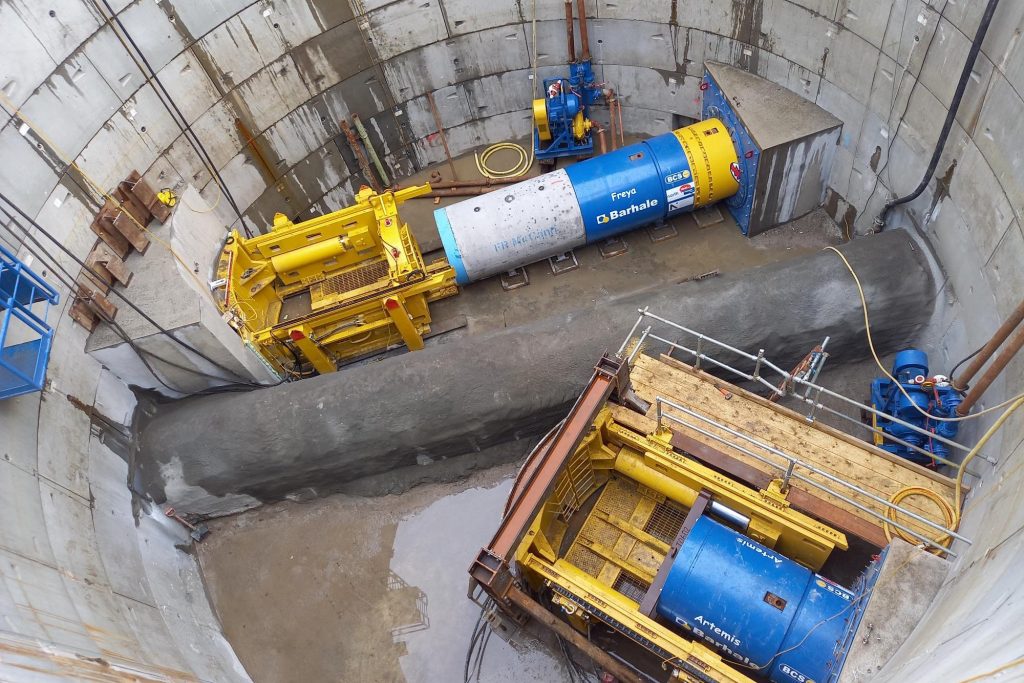
The jacking pipe method has become one of the most efficient and environmentally responsible techniques for underground pipeline installation. Whether for drainage systems, water supply networks, or utility crossings beneath roads, railways, and rivers. Jacking pipe offers a trenchless solution that minimizes disruption while maximizing precision and speed.
This comprehensive guide covers everything you need to know about the jacking pipe method: how it works, its core advantages, and why it is the preferred choice for modern urban infrastructure projects.
What Is Jacking Pipe?
Jacking pipe — also known as pipe jacking or the pipe jacking method — is a trenchless construction technique used to install underground pipelines without the need for open-cut excavation. Instead of digging a trench from the surface, the method uses a hydraulic jacking system to push specially designed pipes through the ground, guided by a tunnel boring or horizontal drilling machine.
The process operates via a slurry system. A cutter head at the front of the machine mechanically excavates the soil, which is then mixed with water to form liquid mud. This slurry is continuously pumped back to the surface, where the water can be recycled and reused in subsequent drilling operations — making the jacking pipe method both resource-efficient and eco-friendly.
The entire operation is remotely controlled by a trained operator from a control room, ensuring precise alignment and minimal risk to workers.
How the Jacking Pipe Method Works: Step by Step
Understanding the jacking pipe process helps clarify why it outperforms traditional open-cut methods in many scenarios. Here is a step-by-step overview:
1. Launch Pit Preparation
A launch pit (jacking shaft) is excavated at the start point. This is the only significant surface excavation required, and it serves as the working area for the hydraulic jacking frame and pipe string.
2. Machine Setup and Boring
The microtunneling or horizontal drilling machine is lowered into the launch pit and aligned with the target direction. The cutter head is activated, and drilling begins.
3. Slurry Excavation and Removal
As the cutter head advances, the excavated material is mixed with water to create slurry. A slurry pump transports this material back through the annular space to a separation plant at the surface, where solids are removed and water is recycled.
4. Pipe Jacking
As the boring machine advances, pre-fabricated jacking pipes are pushed forward from the launch pit using a hydraulic jacking frame. Each new pipe section is added to the string as the previous one advances.
5. Remote Monitoring and Guidance
Throughout the operation, the machine’s position and alignment are monitored from a surface control room using laser guidance and real-time data systems, ensuring accurate installation.
6. Reception Pit Completion
Once the machine reaches the reception pit at the far end, the pipeline is complete. The boring machine is retrieved, and any remaining surface work is finished.
Key Advantages of the Jacking Pipe Method
The growing adoption of jacking pipe technology across infrastructure projects worldwide is driven by a compelling set of benefits:
- Safe Working Conditions: All operations are remotely controlled from a surface control room, significantly reducing worker exposure to underground hazards.
- High Accuracy and Control: Laser-guided steering systems ensure precise pipe placement, even over long distances or complex alignments. This accuracy makes jacking pipe ideal for projects with strict line and grade requirements.
- No Open Excavation: Unlike traditional trenching methods, jacking pipe requires only small launch and reception pits. The result is minimal surface disruption — critical in urban environments, near utilities, and on active roads.
- Reduced Environmental Impact: The jacking pipe method significantly reduces carbon emissions and air pollution by eliminating heavy excavation machinery operating at the surface for extended periods. The slurry water recycling system also reduces overall water consumption.
- Faster Installation: Pipe jacking can advance significantly faster than open-cut methods, especially where ground conditions are suitable and directional accuracy is critical. Faster installation also means lower labour costs and shorter project timelines.
- Ground Stability: Because the surrounding soil is supported throughout the boring process, jacking pipe reduces the risk of land subsidence and protects existing underground utilities and foundations.
- Risk Reduction: From worker safety to community impact, the jacking pipe method systematically lowers the risk profile of underground infrastructure projects.
Why Choose Jacking Pipe Over Open-Cut Excavation?
Traditional open-cut methods are often impractical or impossible in densely populated areas or sensitive environments. The jacking pipe method offers distinct advantages in the following scenarios:
- Road and Highway Crossings: Pipe jacking eliminates the need to close roads or create traffic detours, keeping traffic flowing normally above.
- Railway Crossings: Installation beneath active rail lines without track closures is one of jacking pipe’s most valued capabilities.
- Airport Crossings: Sensitive airside environments require trenchless solutions that preserve surface integrity and operational continuity.
- River and Waterway Crossings: Jacking pipe can be safely routed beneath rivers and waterways without disturbing banks, water flow, or aquatic environments.
- Urban and Residential Areas: Minimising noise, dust, and disruption to residents and businesses makes jacking pipe the preferred method in built-up areas.
- Sites with Existing Utilities: The method protects existing underground infrastructure from damage by avoiding broad surface excavation.
Jacking Pipe and Environmental Sustainability
Sustainability is increasingly central to infrastructure project evaluation. The jacking pipe method aligns well with environmental goals in several ways:
- Lower carbon footprint: Fewer heavy surface vehicles and shorter project durations reduce overall fuel consumption and emissions.
- Reduced soil waste: The slurry system manages excavated material efficiently, with water recovered and reused in ongoing drilling.
- No damage to surface vegetation or land features: Parks, farmland, and protected areas remain untouched.
- Less noise and vibration: Compared to jackhammers and open excavation, pipe jacking operations are far less disruptive to nearby communities and wildlife.
Frequently Asked Questions About Jacking Pipe
What is the difference between pipe jacking and microtunneling?
Pipe jacking is the broader technique of hydraulically pushing pipes through the ground using a jacking frame. Microtunneling is a highly automated form of pipe jacking that uses a remotely operated MTBM (microtunnel boring machine) and is typically used for smaller diameter pipes requiring high precision.
What pipe diameters are suitable for pipe jacking?
Jacking pipe is used across a wide range of diameters, typically from around 250mm up to several metres, depending on the project requirements and machine capability.
Is jacking pipe suitable for all soil types?
The method can be adapted for a variety of soil conditions, including clay, sand, gravel, and soft rock. The slurry system is particularly effective in loose or saturated ground.
How accurate is the jacking pipe method?
Modern jacking pipe systems use laser guidance technology that can achieve millimetre-level accuracy over long distances, making it suitable for gravity sewers and other grade-sensitive applications.
What are the cost implications compared to open-cut methods?
While initial mobilisation costs may be higher, jacking pipe often delivers overall savings by reducing traffic management costs, reinstatement of surface materials, project duration, and the risk of utility strikes.
The Future of Underground Infrastructure: Jacking Pipe
As cities grow denser and infrastructure demands increase, the need for minimally disruptive, accurate, and sustainable construction methods has never been greater. The jacking pipe method answers this need with a proven, technology-driven approach that protects communities, preserves environments, and delivers reliable underground pipelines on time.
AUTHOR BIO:

Endy Gunawan is the Director at Kharisma Group and holds a degree in Engineering , which provides the technical foundation for his expertise in complex infrastructure. He specializes in providing integrated solutions for industrial piping , prefab steel structures , and water storage systems . Endy is dedicated to driving innovation and excellence across Indonesia’s industrial landscape, ensuring that engineering precision meets strategic growth. For project inquiries or professional networking, connect with Endy Gunawan on LinkedIn