
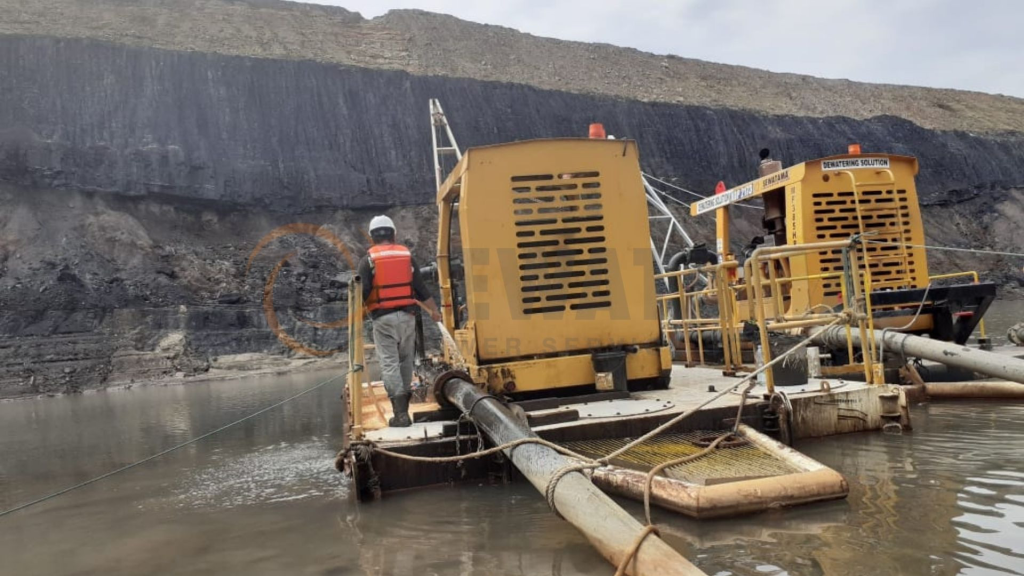
Dewatering in mining isn’t limited to a single fixed number of “types”—it varies depending on the context (e.g., groundwater control in pits/underground workings vs. processing tailings/slurries). Sources describe anywhere from 3–4 main categories to 8–10+ specific techniques or equipment-based methods.
Broadly, mining dewatering falls into two primary categories:
- Hydraulic / Groundwater Dewatering — Removing inflowing water (groundwater, seepage, rain) to keep workings dry.
- Mechanical / Process Dewatering — Separating water from slurries, tailings, or concentrates after mineral processing.
Within these, there are numerous specific methods and structures. Here’s a clear breakdown based on common industry practices.
Main Categories and Common Types
1. Groundwater / Site Dewatering (for Pits and Underground Mines)
These focus on lowering the water table or diverting inflows to prevent flooding and stabilize slopes.
- Sump Pumping — Collect water in low points (sumps) and pump it out—simple and common for open pits and shafts.
- Wellpoint Systems — Shallow wells with vacuum pumps for sandy soils and shallow excavations.
- Deep Wells / Boreholes — Drilled wells with submersible pumps to lower groundwater deeply.
- Horizontal Drains — Installed into slopes or walls to drain seepage naturally.
- Eductor / Jet Eductor Wells — For low-permeability soils like clays (uses venturi effect).
- Cut-Off / Sealing Walls — Barriers (grout curtains, sheet piles) to block inflow.
- Gravity Drainage — Channels, ditches, or adits to divert water passively.
- Vacuum Drainage — Applied in specific setups for enhanced extraction.
Many sources list 4–8 core techniques here, with hybrids common in complex sites.
2. Process / Slurry / Tailings Dewatering (in Mineral Processing)
These reduce moisture in slurries or tailings for safer disposal, water recovery, and dry stacking.
- Thickening — Gravity-based settling in thickeners/clarifiers to concentrate solids.
- Mechanical Dewatering — Uses force (pressure, centrifugal, vibration):
- Filter Presses
- Belt Filter Presses
- Centrifuges (decanter/solid-bowl)
- Dewatering Screens / Vibrating Screens
- Disc Vacuum Filters
- Thermal Drying — Rotary dryers or similar (less common due to energy cost).
- Hydrocyclone Dewatering — For partial classification and water removal.
- Paste / Thickened Tailings — High-density methods combining thickening with pumping.
In tailings management, experts often highlight 3–5 key methods (thickening, filtration, centrifugation, dry stacking), with mechanical options dominating modern sustainable practices.
How Many Types Overall?
- Broad view: 2 main categories (groundwater vs. process/tailings).
- Practical count: 6–12 specific types/techniques, depending on classification (e.g., Wikipedia lists 8+ for open pits/underground; mineral processing guides list 4–6 equipment types).
- No universal “exact number”—it depends on whether you’re counting broad methods, equipment, or structures.
The right approach combines techniques (e.g., sump pumping + horizontal drains + thickening for tailings) based on site geology, water volume, solids content, and regulations.
Why Reliable Piping Matters Across All Types
Effective dewatering—whether groundwater extraction or slurry processing—relies on durable pipelines to transport water or slurry without leaks, blockages, or rapid wear. HDPE pipes resist abrasion from solids, handle pressure, and install easily in Indonesia’s varied terrain.
Aiko Indonesia supplies premium HDPE pipes optimized for all dewatering applications: sump discharge, tailings lines, process feeds, and more. They support safer, more efficient systems across groundwater and mechanical dewatering.
Conclusion: Choose Dewatering Types That Fit Your Mining Operation
There isn’t one fixed number, but mining dewatering typically involves 2 main categories with 6–12+ practical types/techniques—from sump pumping and deep wells to filter presses and centrifuges.
Selecting the best mix prevents flooding, recovers water, and ensures tailings safety.
At Aiko Indonesia, our HDPE pipes integrate reliably with any dewatering setup—abrasion-resistant and built for Indonesian mining challenges. Contact us today to discuss solutions that enhance your dewatering strategy, reduce risks, and improve long-term performance.