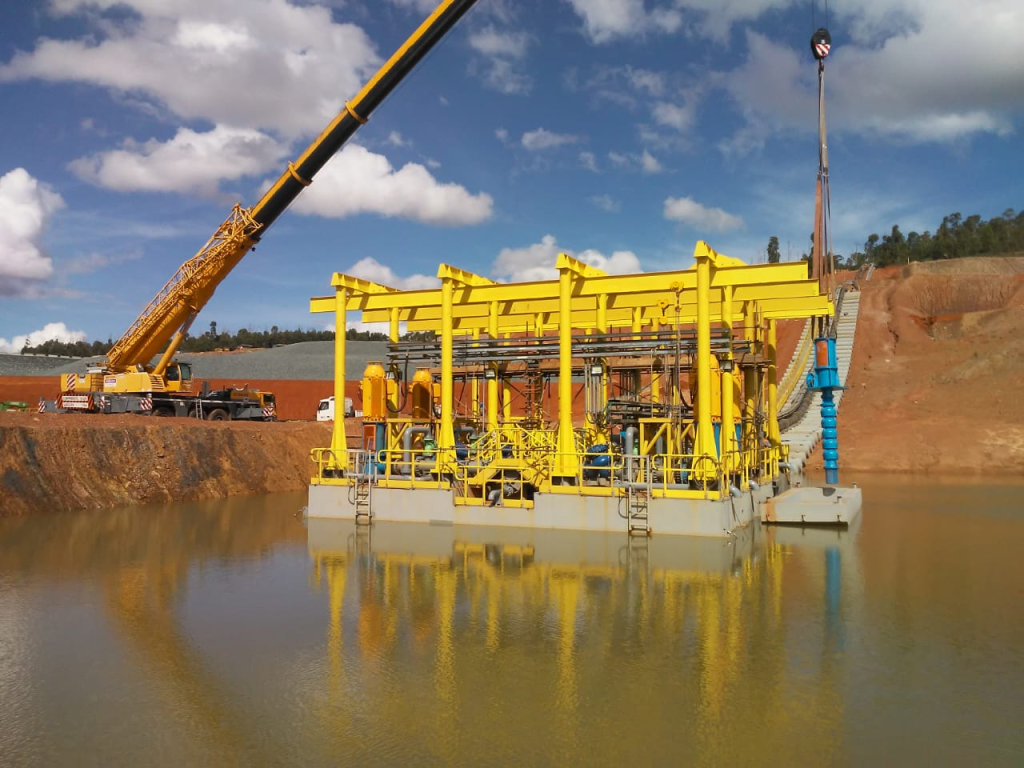
Dewatering in mining involves removing excess groundwater, surface water, seepage, or process water from pits, underground workings, tailings, or slurries. While essential for safety, productivity, and environmental compliance, it often faces recurring challenges—especially in Indonesia’s high-rainfall, seismic, and remote mining sites (nickel, coal, copper, gold).
These problems can lead to flooding, equipment failures, high costs, safety risks, and regulatory issues. Below are the most common dewatering problems, grouped by category.
1. Equipment and System Failures
- Pump clogging and blockages — Gritty suspended solids, slurry, or debris clog impellers, intakes, or lines, causing reduced flow or complete failure. This is one of the top causes of pump breakdowns in mine dewatering.
- Abrasive wear — Solids erode pump parts (impellers, casings, liners), shortening life and requiring frequent replacements.
- Overheating or mechanical damage — Pumps run dry, overload, or suffer cord/impact damage in harsh environments.
- Inadequate sizing or design — Undersized pumps can’t handle peak inflows (e.g., heavy rain); poor pipe sizing causes restrictions or high energy use.
- Equipment access issues — Fluctuating water levels make pumps hard to reach or maintain safely, especially in open pits or sumps.
2. Water Volume and Inflow Challenges
- High or unpredictable inflows — Sudden heavy rainfall, groundwater seepage, or seasonal changes overwhelm systems, leading to flooding of pits, tunnels, or haul roads.
- Fluctuating water levels — Variable levels cause pumps to lose prime, run inefficiently, or create unstable conditions.
- Inadequate dewatering capacity — Systems fail to keep up with production demands or peak events, halting operations.
3. Tailings and Process Dewatering Issues
- Poor solid-liquid separation — Ineffective thickening or filtration leads to high-moisture tailings, larger storage needs, or unstable dams.
- Buildup and scaling — Settled solids cake in pipes, thickeners, or filters, reducing efficiency and requiring frequent cleaning.
- Variable slurry properties — Changing particle size, rheology, or chemistry affects settling and dewatering performance.
4. Environmental and Safety Risks
- Contaminated discharge — Sediments, chemicals, or heavy metals in pumped water risk polluting groundwater or surface water if not managed.
- Slope instability or subsidence — Over-pumping lowers water tables, potentially causing ground settlement, wall failures, or landslides.
- Corrosion and infrastructure damage — Prolonged exposure to water corrodes equipment, pipes, and structures.
- Safety hazards — Flooded areas create slippery surfaces, electrical risks, or unstable ground for workers.
5. Operational and Maintenance Problems
- High energy and maintenance costs — Inefficient systems or frequent failures increase power use and downtime.
- Remote site limitations — Difficult access delays repairs, parts delivery, or monitoring in Indonesia’s rugged terrain.
- Regulatory non-compliance — Exceeding discharge limits or poor water management leads to fines or shutdowns.
How to Mitigate These Common Problems
- Use abrasion-resistant pumps and HDPE pipes to handle solids and reduce wear/clogging.
- Install monitoring (flow meters, level sensors) for early detection.
- Design with redundancy (backup pumps, oversized capacity) and regular maintenance.
- Conduct site-specific hydrogeological studies and pilot testing.
- Apply proper flocculants/coagulants for better tailings separation.
Reliable piping plays a big role—durable HDPE pipes resist abrasion from solids-laden water, minimize blockages, handle pressure surges, and support long-distance discharge without leaks.
Aiko Indonesia supplies premium HDPE pipes tailored for dewatering systems, tailings lines, sump discharge, and slurry transport. They reduce many common problems like wear, buildup, and failures—ideal for tough Indonesian mining conditions.
Conclusion: Address Dewatering Problems Proactively for Safer Mining
Common dewatering problems—clogging, abrasion, high inflows, equipment failures, and environmental risks—can disrupt operations and raise costs if ignored.
Proactive design, quality equipment, and monitoring prevent most issues and keep sites productive and compliant.
At Aiko Indonesia, our HDPE pipes help overcome these challenges by providing abrasion-resistant, flexible, and reliable transport solutions. Contact us today to discuss how our pipes can strengthen your dewatering setup, minimize downtime, and support efficient mining in Indonesia.
AUTHOR BIO:

Endy Gunawan is the Director at Kharisma Group and holds a degree in Engineering, which provides the technical foundation for his expertise in complex infrastructure. He specializes in providing integrated solutions for industrial piping, prefab steel structures, and water storage systems. Endy is dedicated to driving innovation and excellence across Indonesia’s industrial landscape, ensuring that engineering precision meets strategic growth. For project inquiries or professional networking, connect with Endy Gunawan on LinkedIn